
Billable hours without spreadsheet chaos
How agencies connect tracked time, client rates, and clear exports in one workflow — without rebuilding reports every Friday.
 Hubnity
Finance and delivery teams often lose hours every week reconciling spreadsheets, exports, and client rate tables. A cleaner workflow starts with consistent tags at the point of work — before entries pile up and context is lost.
Connect time entries to clients early
When project and client context is captured during tracking, invoice prep becomes a review step instead of a reconstruction project.
Late tagging is the main source of billing errors. People forget which client a task belonged to, and finance teams end up guessing.
- Use project templates with default billable rules
- Review unassigned time before weekly close
- Export clear summaries by client
Standardize rate tables and approval ownership
Client rates should live in one source of truth — not in three spreadsheets maintained by different account managers.
Define who approves billable adjustments and how exceptions are documented. Ambiguity here creates month-end bottlenecks.
Reduce manual exports with structured reporting
Reports should map directly to invoice line items: client, project, role, rate, hours, and status.
When exports require manual cleanup every cycle, the problem is usually field mapping — not team discipline.
Close the loop with delivery teams
Share a short billing summary with project leads each week. Visibility helps them catch mis-tagged work before it reaches clients.
Celebrate accuracy improvements, not just speed. Billing quality protects margin and client trust.
Practical steps to apply this week
- Audit your top five clients for missing project tags this week
- Create a shared rate table with a single owner
- Set a recurring 15-minute unassigned-time review
- Map export fields to your invoice template once, then automate
Conclusion
Billable hour workflows break when context is captured too late. The fix is operational design, not more spreadsheets.
Teams that tag work in the moment spend less time reconciling and more time delivering billable value.

Hubnity
Practical guidance from the Hubnity product and operations team.
Related articles
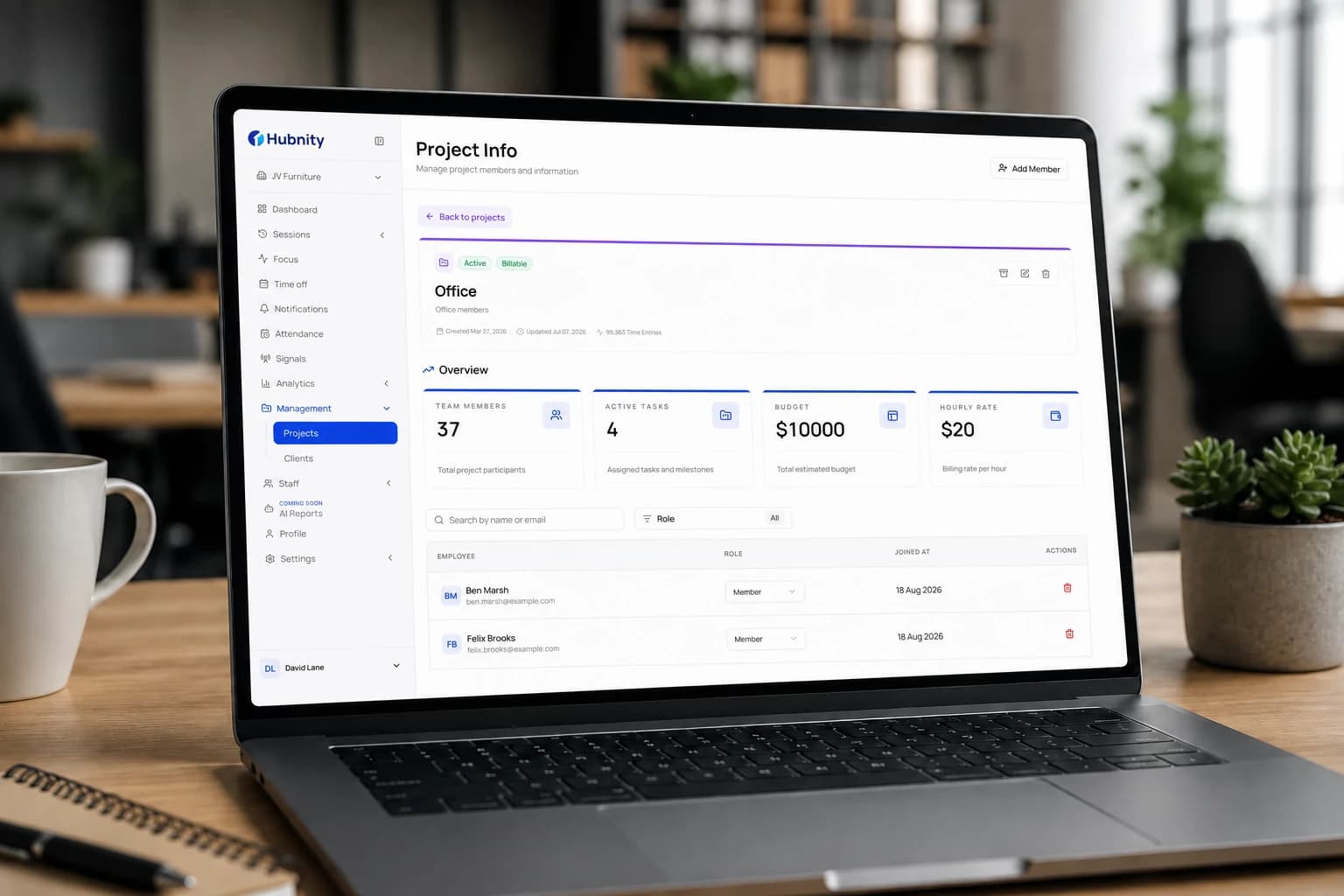 Payroll & Billing
How to segment billable work by client and project
Structure tags, rates, and export rules so finance can reconcile invoices without manual spreadsheet merges.
6 min readHubnity Remote Teams
How to build a time tracking policy remote teams actually trust
A practical playbook for rolling out time tracking without hurting morale — from policy wording to privacy defaults.
8 min readHubnity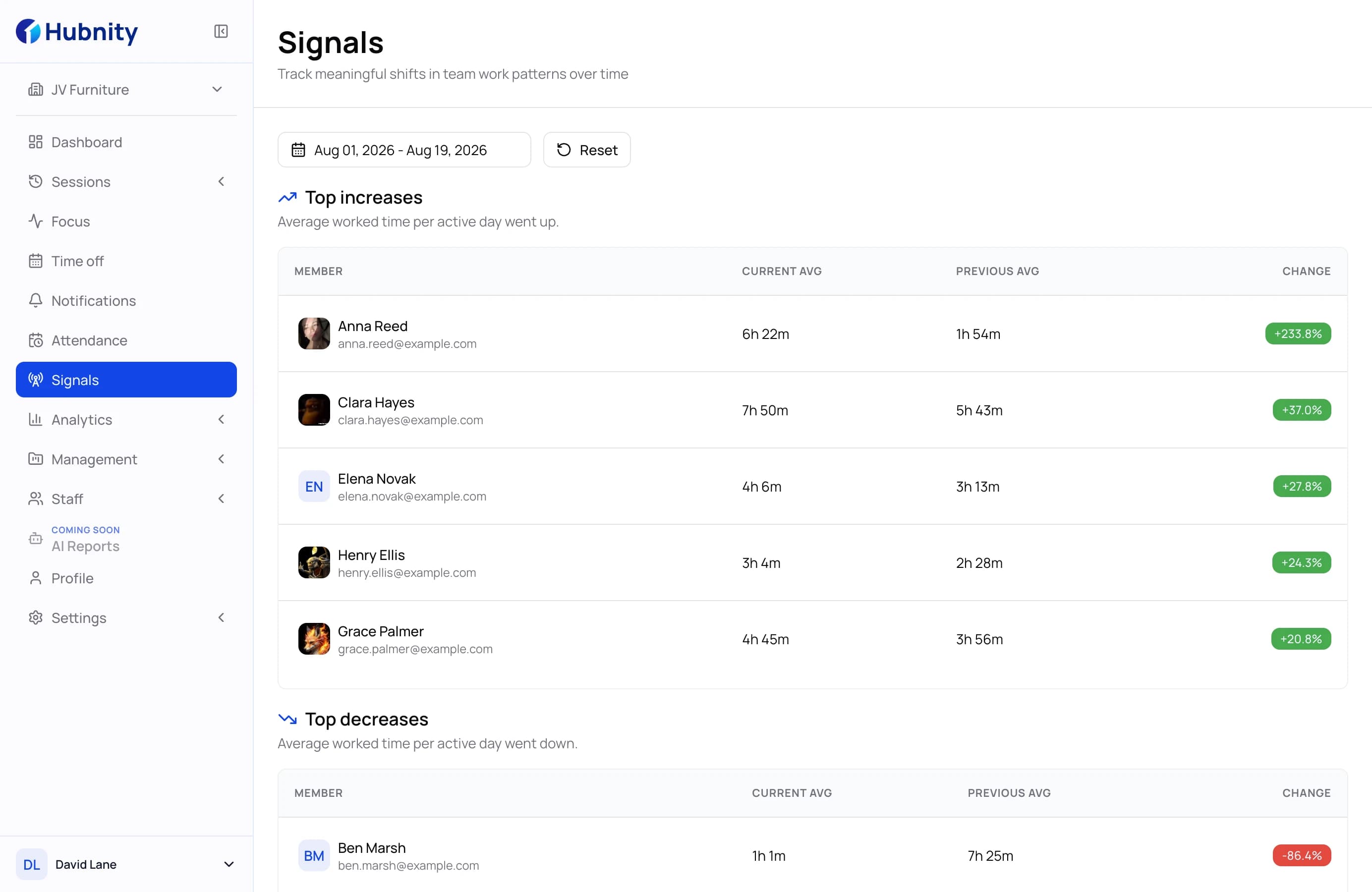 Employee Productivity
Deep work signals for distributed teams
Turn activity patterns into actionable focus insights for managers — without micromanaging every app switch.
7 min readHubnity