
01
Capture work location context
Use time tracking, schedules, and team context to separate remote, hybrid, and office workdays.
Hubnity helps hybrid teams understand location-based work patterns, schedule rhythm, idle signals, and member context in one clear view.
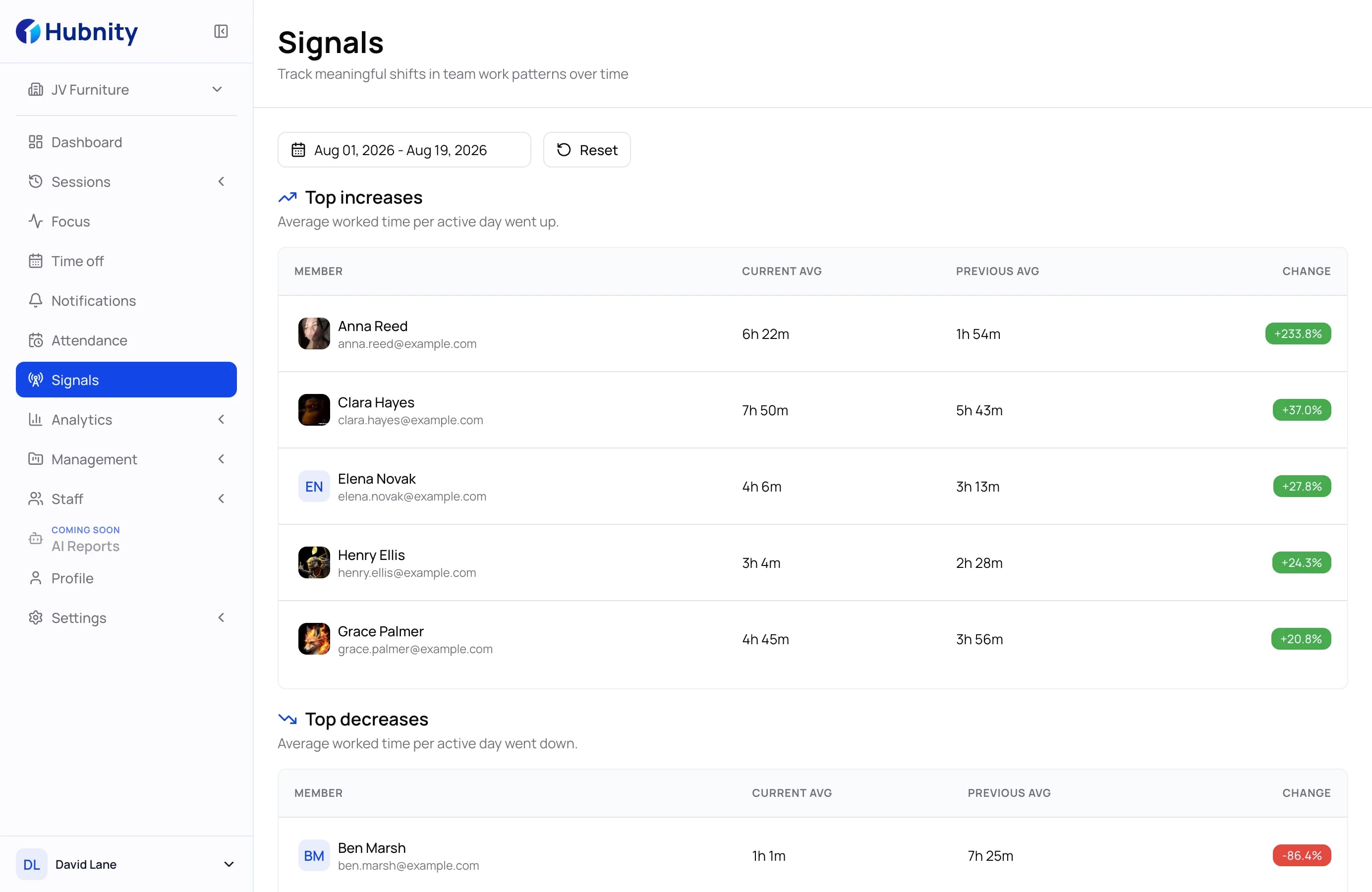
Hybrid performance views
Switch between the location signals managers need without adding decorative graphs or crowded dashboards.
Average hours
Understand how remote, hybrid, and office days differ so managers can plan coverage and capacity with better context. The view helps teams compare working patterns without reducing performance to one isolated metric.
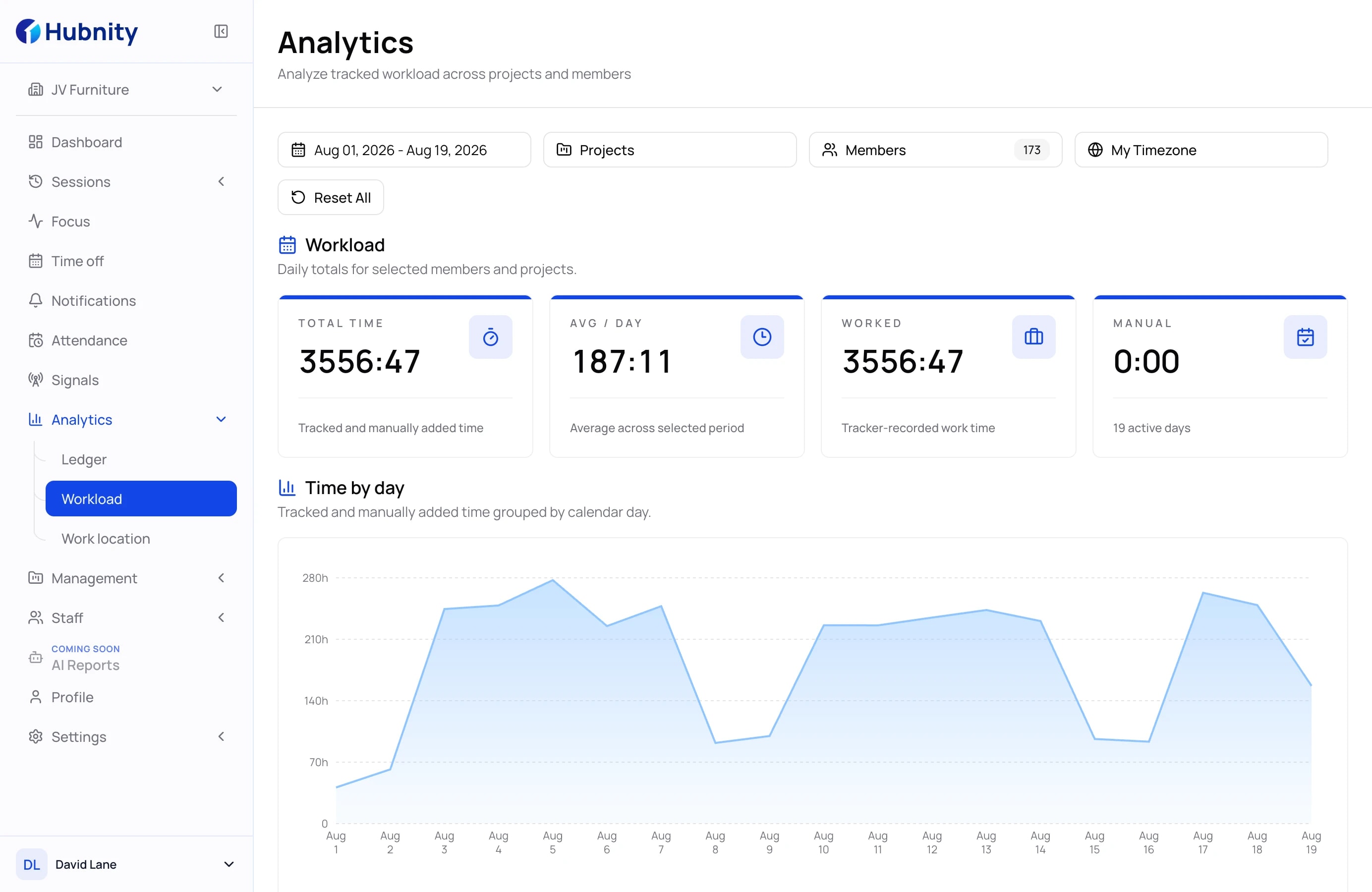
How it works
Review remote and office work patterns without reducing team performance to a chart.
01
Use time tracking, schedules, and team context to separate remote, hybrid, and office workdays.
02
Review plain-language location signals like schedules, idle time, and team distribution.
03
Use the findings to improve coverage, focus time, collaboration days, and staffing plans.
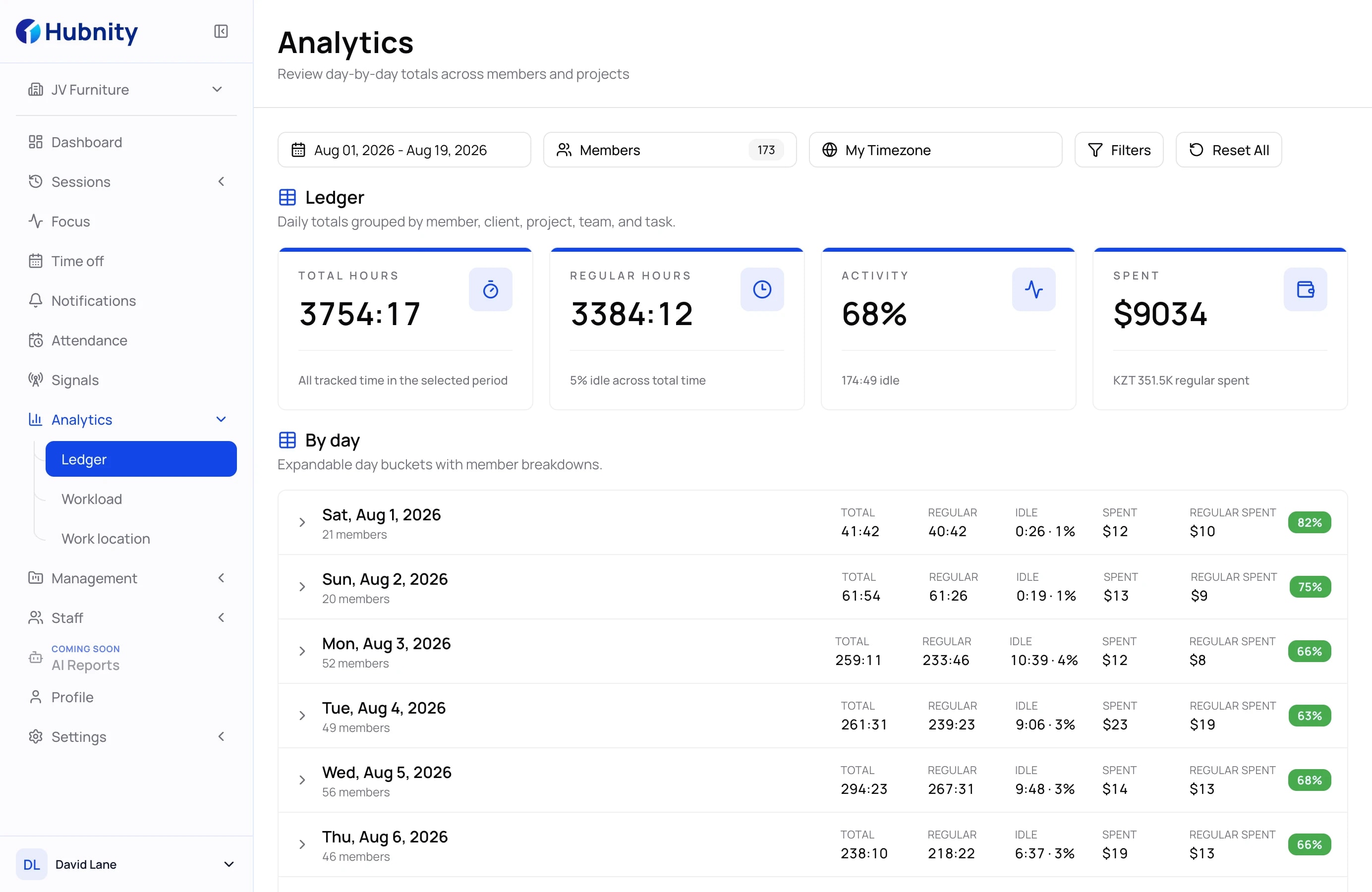
Hybrid work toolkit
Keep remote and office context connected to everyday time and attendance workflows.
Support autonomy while giving managers enough detail to understand work patterns.
Use location context to plan coverage, desk usage, and collaboration windows.
Compare location-based work patterns without adding visual noise.
It compares work patterns by location so managers can understand schedules, focus signals, idle time, and team distribution across remote and office work.