
Production lines
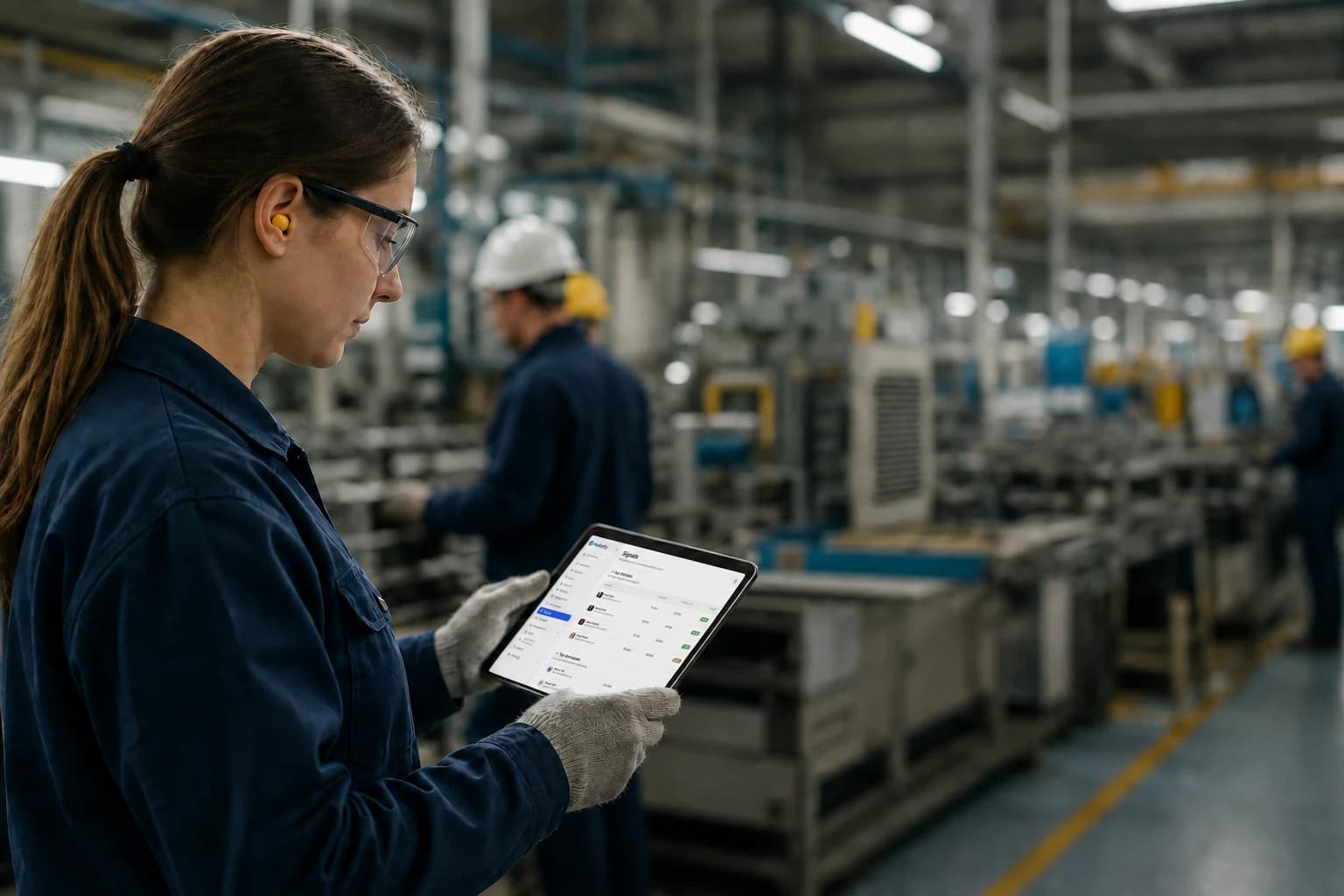
Track machine-operator time, production workdays, and breaks without relying on paper records from the shop floor.
- Operator time
- Production records
- Break context
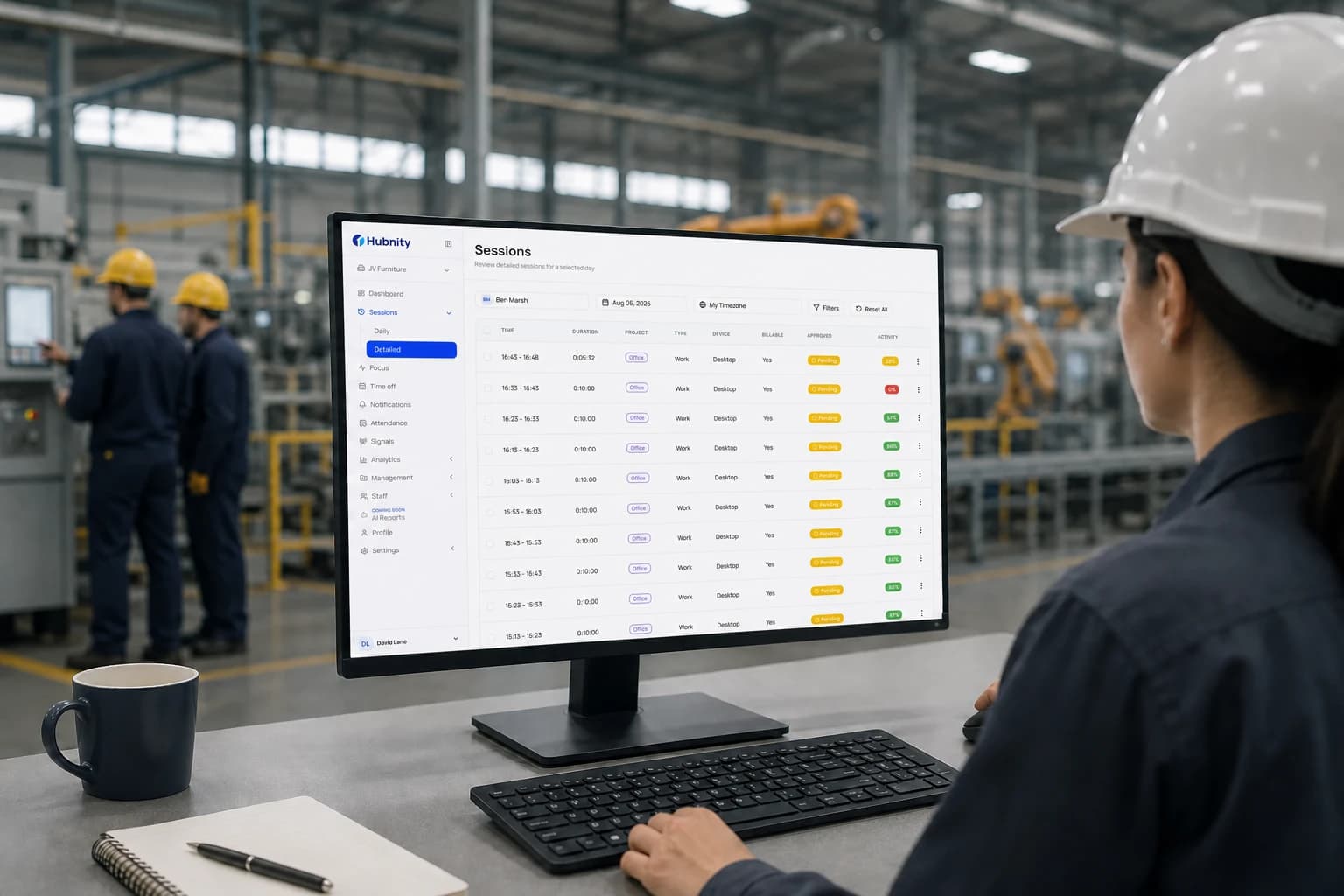
Hubnity helps factories, production facilities, and industrial companies record working hours, review time entries, and add mobile or GPS location context when it is needed.
Best for: Manufacturing companies, Factories, Industrial teams. The visible metrics are Tracked hours, Labor cost context, Project visibility. This keeps daily work from turning into manual follow-up.
Industry operating rhythm
Hubnity brings together the records that matter in this industry, so managers can review daily work in the context of real sites, clients, shifts, or service demands.
Industry setup
Each block connects the work records to the conditions that affect this sector: operating rhythm, service delivery, locations, and review requirements.

Outcomes
Manufacturing companies use Hubnity to track employee time, review factory and warehouse records, and improve work visibility across multiple locations.
Talk to salesUse cases for Manufacturing & Industry
Hubnity gives each team a practical record of employee time, daily work, attendance, delivery, and operational progress.
Track machine-operator time, production workdays, and breaks without relying on paper records from the shop floor.
Give warehouse employees and mobile teams a practical way to clock in, verify location, and keep daily labor visible across busy operations.
Review tracked hours, overtime, and project context before time records become difficult to investigate.
Use timesheets, reports, and export-ready records to reduce manual admin and improve time review.
Comparisons
These comparisons help teams choose the right workflow before time records, payroll details, or performance reports become hard to trust.
Paper timesheets are easy to lose, misread, or submit late. Hubnity gives manufacturing teams structured time, break, overtime, and project records.
Punch cards show basic clock events but rarely explain project, site, department, or workload context. Hubnity connects time records to operational visibility.
Spreadsheets require manual consolidation across teams, departments, and sites. Hubnity centralizes manufacturing work records so managers can review them faster.
Manufacturing companies use Hubnity to track employee time, review factory and warehouse records, add location context where needed, and improve visibility across multiple locations.
Related workflows
Clear answers about setup, visibility, reporting, and the workflows teams need to trust.
Manufacturing time tracking software helps factories and industrial companies record employee hours, breaks, overtime, and reviewable work records. Hubnity connects those records to production teams, warehouses, departments, and multi-site operations.
Factories can record time through supported work devices while managers review daily time records, overtime, and project context from one dashboard.
Yes. Hubnity supports production teams by tracking working hours, breaks, overtime, and project context. Managers can use these records to review work before the next operational decision.
Yes. Hubnity supports mobile time tracking for employees who need flexible clock-in workflows. This is useful for warehouse teams, supervisors, mobile workers, maintenance staff, and multi-location manufacturing operations.
Hubnity includes GPS-enabled time tracking for teams that need location context. Manufacturing companies can use GPS signals to support warehouse visibility, field work, site verification, and multi-location attendance review.
Hubnity supports PDF and CSV export from available reporting flows, so managers can move a reviewed period into the next operational workflow.
Yes. Hubnity can support multiple production sites, warehouses, workshops, and departments. Managers can review time records, productivity signals, and reports across locations from one platform.
Yes. Hubnity can support small production teams, growing factories, warehouses, and larger industrial operations. The workflow helps companies keep employee time, overtime, and project records organized as operations become more complex.