
Shift templates
Create reusable patterns for common staffing scenarios so schedule planning starts from a proven baseline.
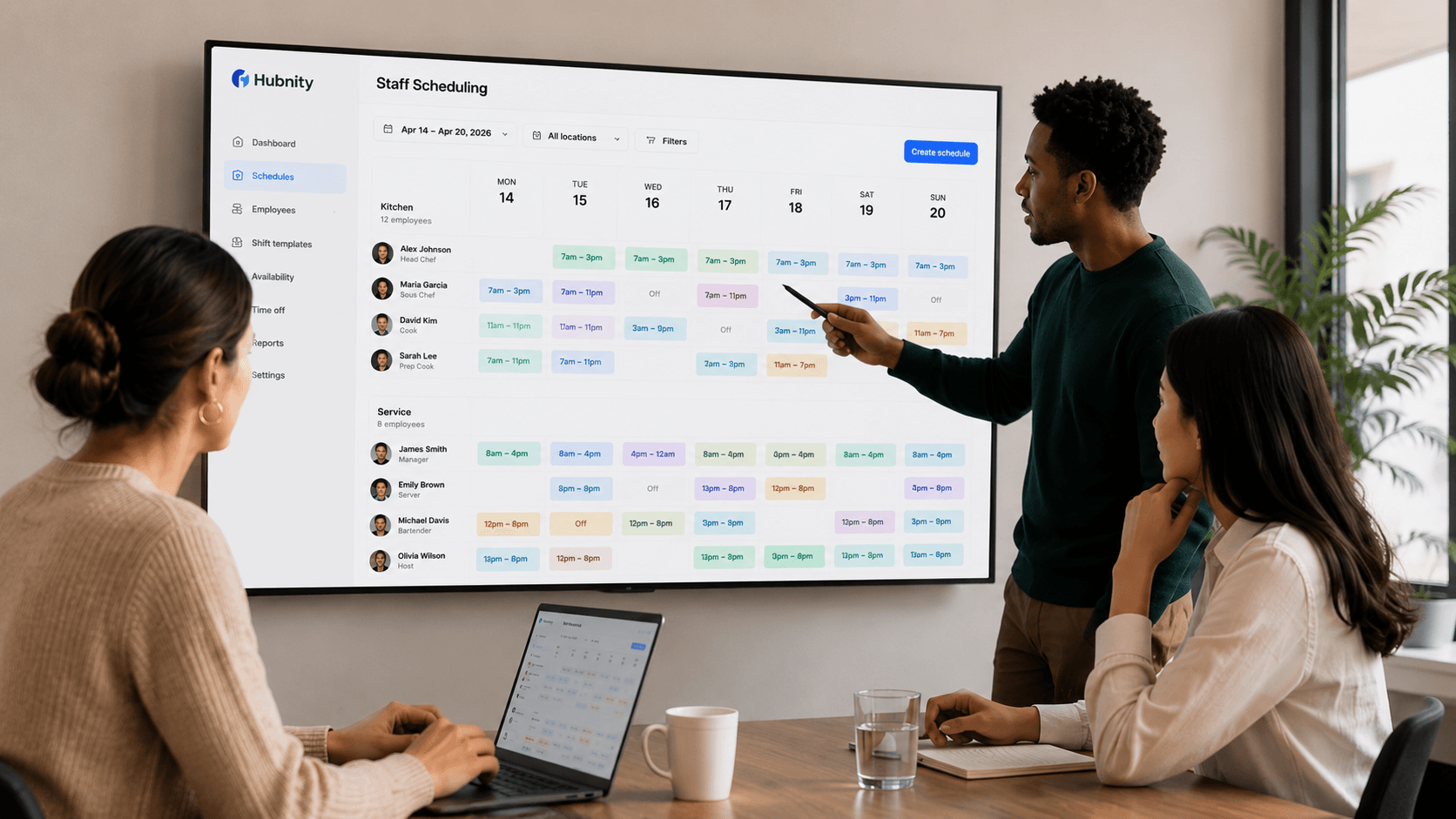
Hubnity Staff Scheduling helps managers create schedules faster by combining reusable shift templates, coverage alerts, and live team availability in one coordinated view.
Live metric
Shift templates
Updated now
Live metric
Coverage gaps
Updated now
Live metric
Team availability
Updated now
Product toolkit
Design repeatable schedules, detect staffing risk early, and staff every shift with confidence.
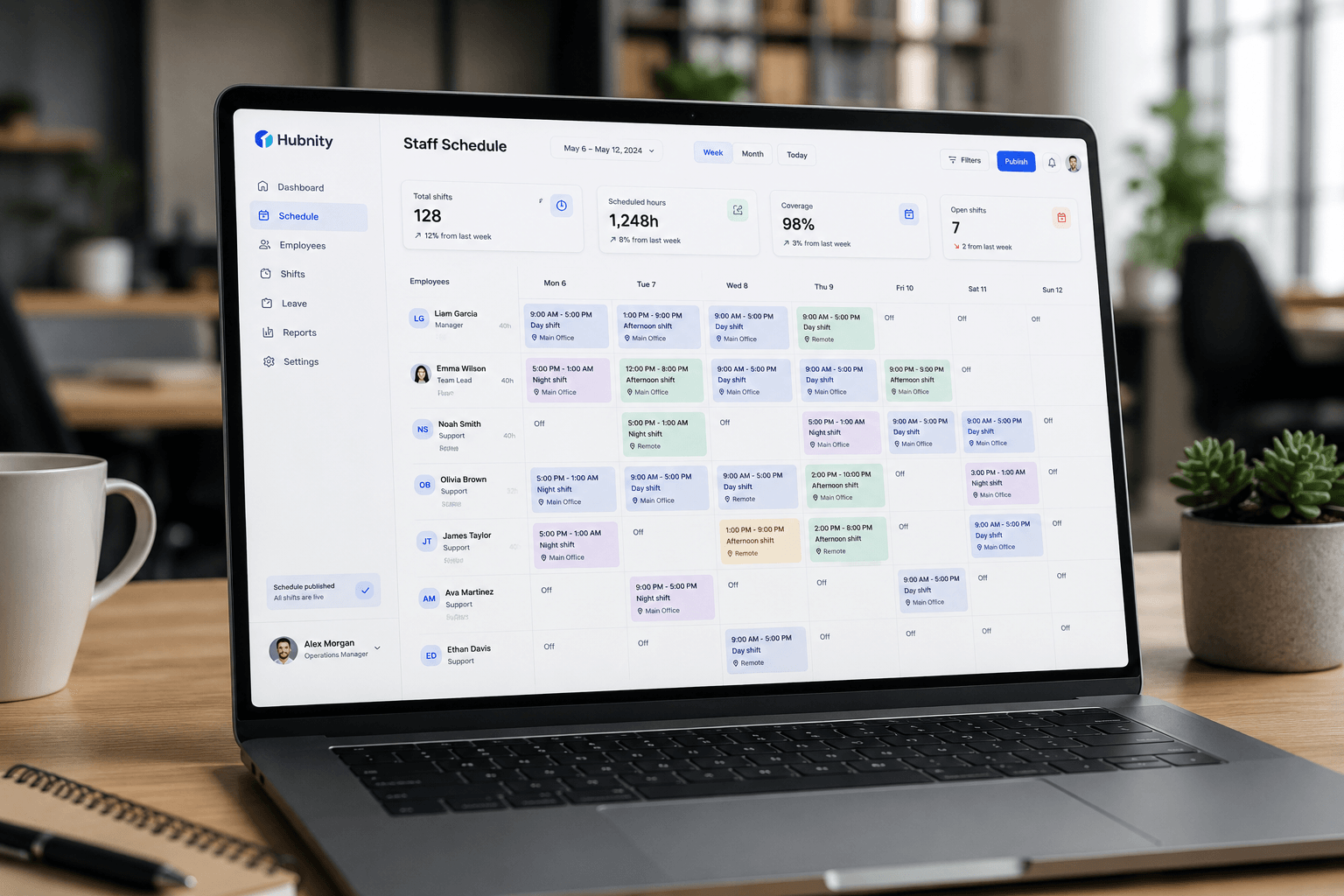
Create reusable patterns for common staffing scenarios so schedule planning starts from a proven baseline.
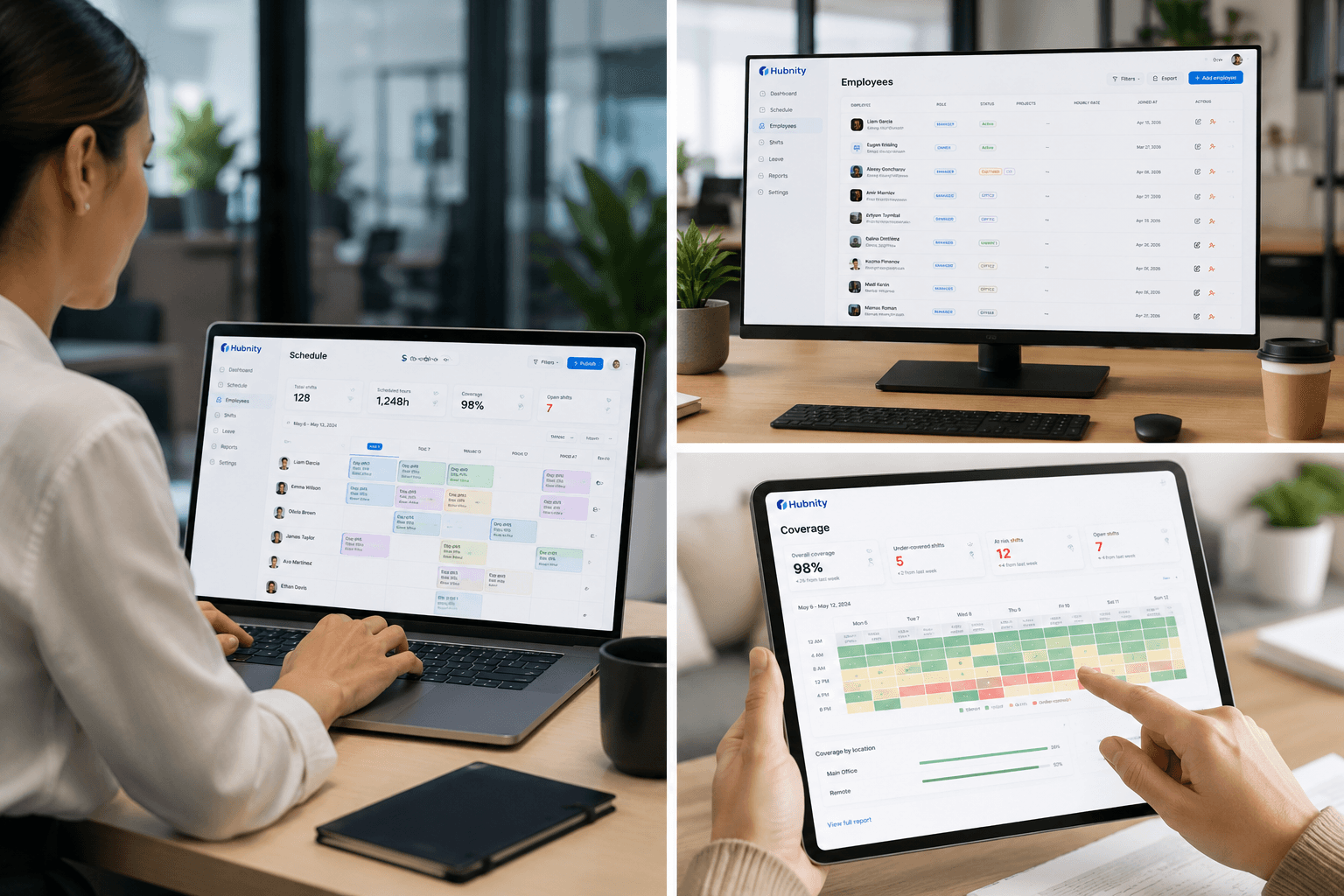
Spot under-covered shifts and role mismatches before schedules are published to the team.
Schedule around real availability windows, leave, and role constraints without manual cross-checking.
Step-by-step flow
Set scheduling standards, publish weekly plans, and refine staffing decisions with data-backed feedback loops.
Define coverage rules, role requirements, and standard shift blocks to speed up recurring planning.
Assemble shifts with availability-aware assignments and share finalized schedules with minimal rework.
Analyze missed coverage, swap patterns, and demand spikes to continuously improve next-week schedules.
Scheduling dashboard
Managers can monitor scheduled coverage, open gaps, and team availability from one planning dashboard before shifts begin.
Integrations
Scheduling remains aligned with attendance, leave, and policy controls by connecting the systems teams already use.
Compare planned schedules with actual attendance to tighten planning accuracy over time.
Stack-ready
Automatically account for approved leave when building schedules and filling upcoming shifts.
Stack-ready
Apply qualification and policy constraints so each shift is staffed by the right people.
Stack-ready
Use cases
Operational scenarios where scheduling quality directly impacts service levels and team efficiency.
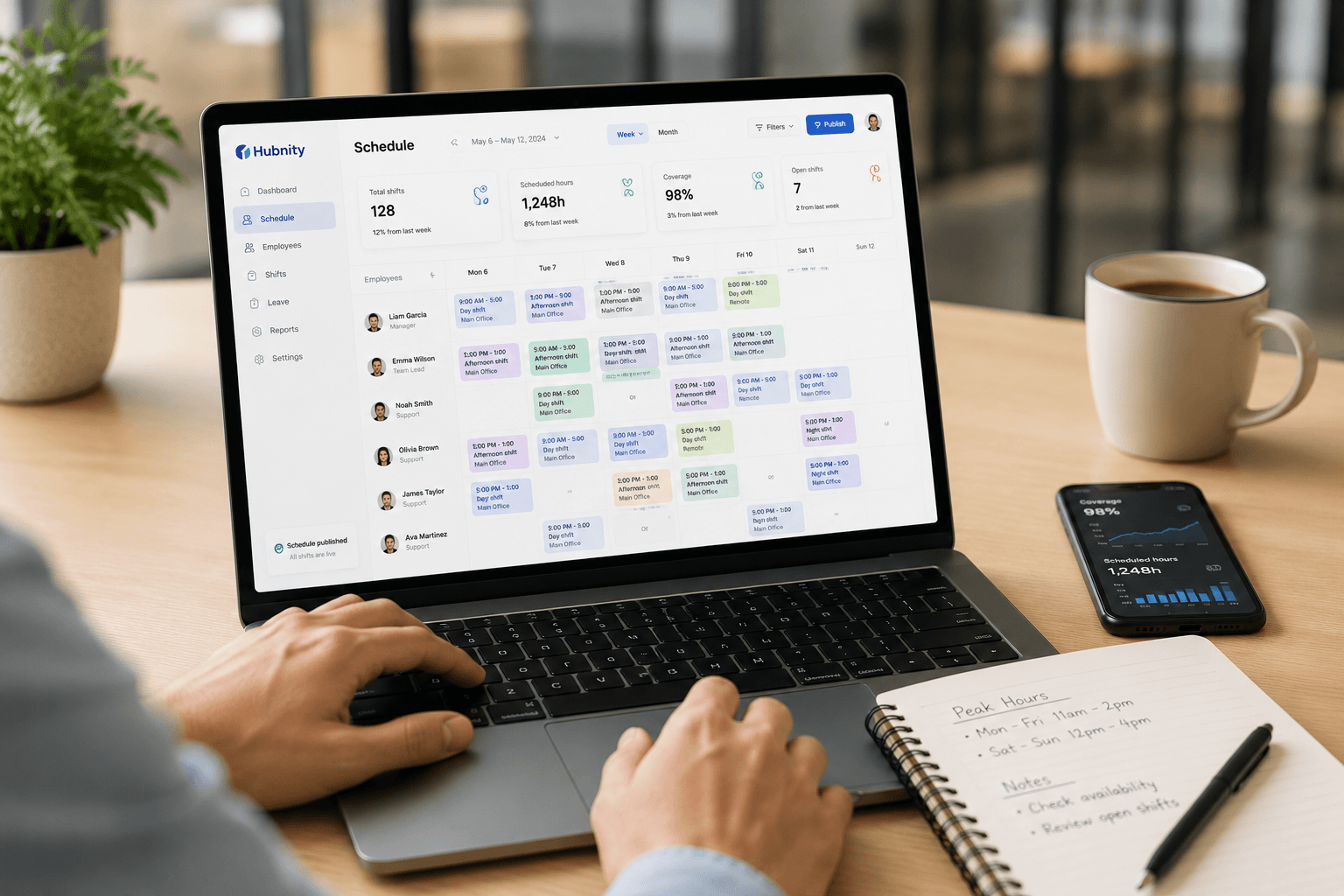
Maintain consistent scheduling practices across sites while adapting to local staffing realities.
Plan around demand spikes with templates and alerts that prevent high-traffic coverage failures.
Protect service quality by ensuring each shift assignment matches skills and policy requirements.
Why teams switch
Manual rosters create avoidable coverage risk. Hubnity provides a structured scheduling system built for changing workforce realities.
Platform ecosystem
Each product connects to the same workforce data layer — start here, then add scheduling, leave, payroll, and analytics when your team is ready.
Track project budgets, forecast spend, and keep labor costs visible before they drift off plan.
Explore productAssign work, follow progress, and connect delivery to the hours your team actually spends.
Explore productPlan rotations, labor demand, and last-minute schedule changes with one operational view.
Explore productTrack balances, route approvals, and see how time off affects coverage before schedules break.
Explore productRun payroll with approved hours, deductions, and pay cycles connected to the time and leave data your team already tracks.
Explore productCoordinate scheduling, coverage, roles, and daily operations in one workforce management layer across your teams.
Explore productTurn time, attendance, scheduling, and payroll data into workforce analytics leaders can act on every week.
Explore product