
URL tracking policies that balance privacy and insight
Define what domains are in scope, how data is retained, and how employees can audit their own activity history.
 Hubnity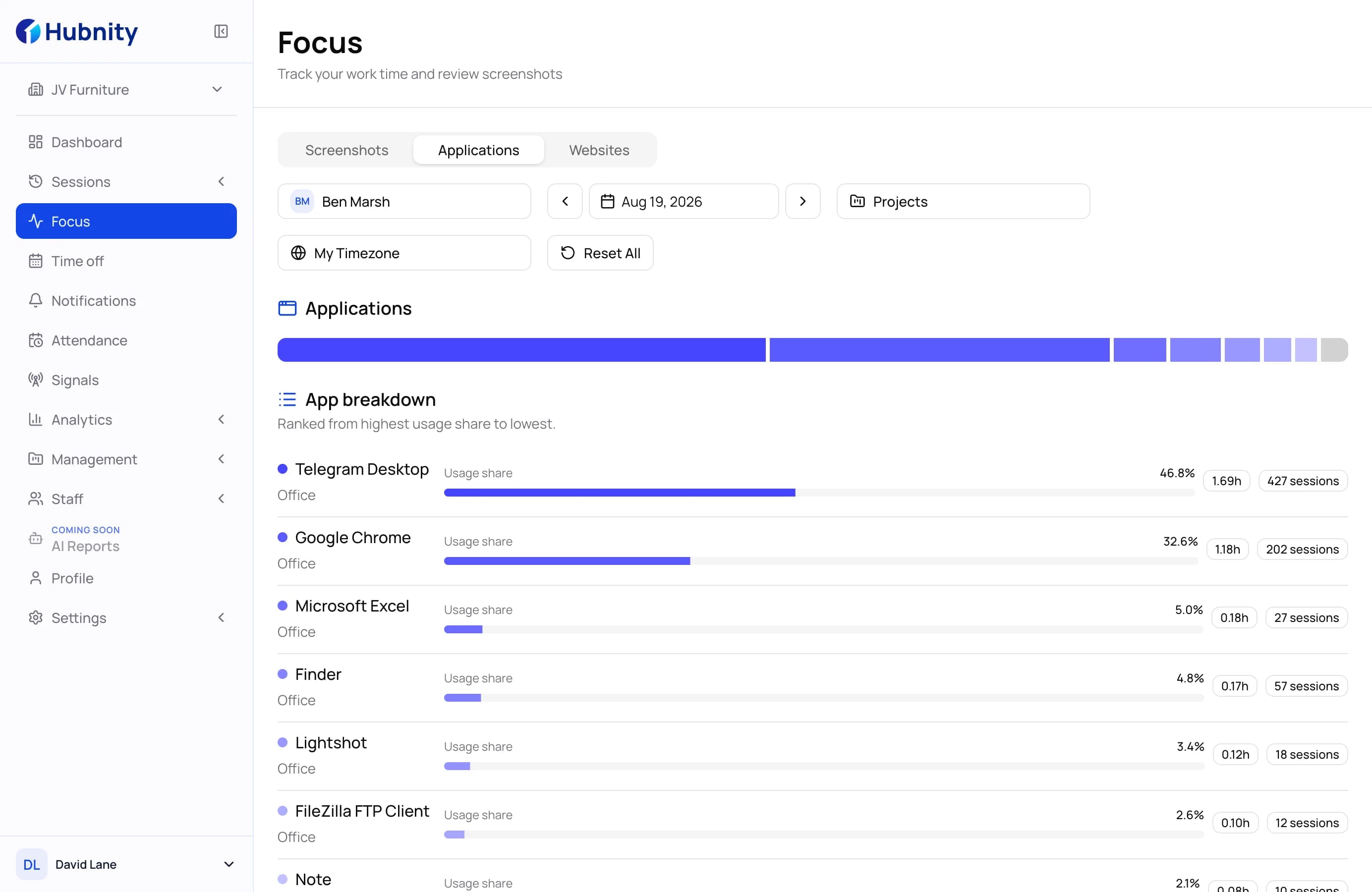
URL tracking can support coaching and compliance without feeling invasive when policies are transparent and employees can review their own history. The difference is almost always in how the policy is written and rolled out.
Define scope before rollout
Document which domains are in scope, how long data is retained, and how employees can request corrections.
Scope clarity prevents the assumption that 'everything is monitored all the time.'
- List in-scope domain categories explicitly
- Set retention periods aligned with compliance needs
- Provide a correction and dispute process
Default to employee-visible history
When people can see their own activity timeline, policy conversations shift from suspicion to improvement.
Managers should use URL insights for coaching patterns — not for single-click judgments.
Separate security monitoring from performance review
Mixing security incident data with performance conversations erodes trust quickly.
Define distinct use cases, access roles, and review processes for each.
Review policy effectiveness every quarter
Ask whether URL insights actually changed outcomes: fewer incidents, better focus, faster onboarding.
If not, reduce scope instead of expanding it.
"Transparency in policy beats precision in surveillance."
Practical steps to apply this week
- Publish URL tracking scope and retention in your employee handbook
- Enable self-review for all tracked users
- Train managers on coaching-oriented review conversations
- Schedule a quarterly policy effectiveness review
Conclusion
URL tracking policies succeed when employees understand scope and can see their own data.
Insight and privacy are not opposites — they are design choices.

Hubnity
Practical guidance from the Hubnity product and operations team.
Related articles
 Employee Productivity
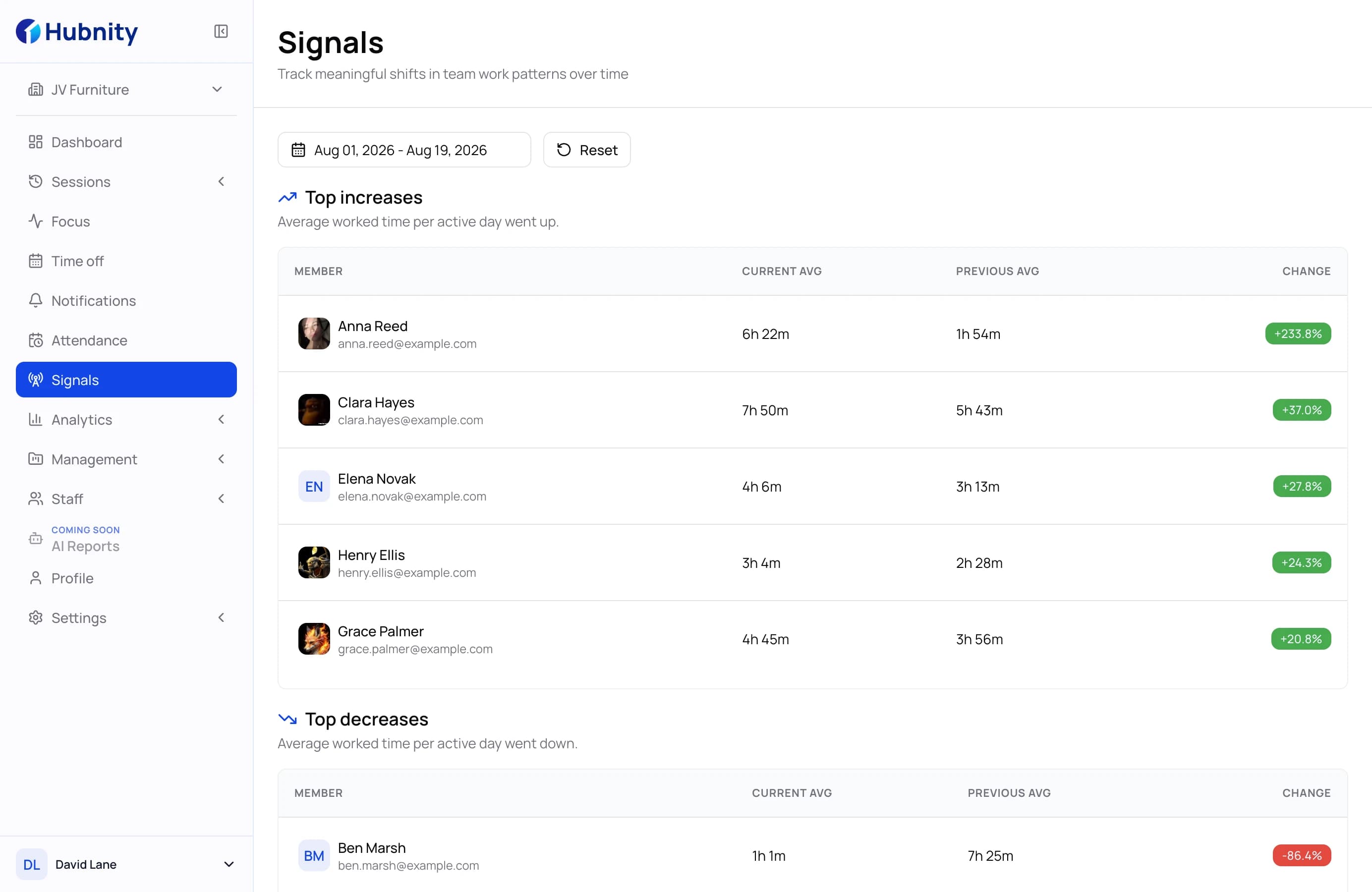
Deep work signals for distributed teams
Turn activity patterns into actionable focus insights for managers — without micromanaging every app switch.
7 min readHubnity Employee Productivity
Reducing meeting load with async status updates
Replace low-value syncs with structured written updates tied to tracked work blocks and delivery milestones.
5 min readHubnity Remote Teams
How to build a time tracking policy remote teams actually trust
A practical playbook for rolling out time tracking without hurting morale — from policy wording to privacy defaults.
8 min readHubnity