
Reducing meeting load with async status updates
Replace low-value syncs with structured written updates tied to tracked work blocks and delivery milestones.
 Hubnity
Written status updates can replace low-value syncs when teams agree on format, timing, and where updates are reviewed. The savings are real — but only if async replaces meetings, not supplements them.
Keep updates lightweight
The best async updates are short, scannable, and linked to tracked work so managers can drill down only when needed.
Long narrative updates recreate meeting fatigue in text form.
- Three bullets maximum for routine updates
- Link to project or task context
- Flag blockers with a consistent label
Identify meetings to remove first
Start with status meetings that rarely change decisions. Keep workshops and conflict resolution live.
Publish a 'meetings removed' list so the team sees progress.
Create manager review habits
Managers should batch-read updates once or twice daily — not respond to every message in real time.
Batching protects focus for both writers and readers.
Measure meeting hours reclaimed
Track calendar hours before and after the change. Reclaimed time should go to focus blocks — not new meetings.
Share results in retrospectives to reinforce the habit.
"Async works when leaders model the behavior they expect."
Practical steps to apply this week
- Cancel one low-value recurring status meeting this sprint
- Adopt a three-bullet update template
- Batch manager reviews at a fixed daily time
- Track reclaimed meeting hours for four weeks
Conclusion
Async status updates reduce meeting load when they replace syncs and stay lightweight.
The win is measured in focus time recovered — not messages sent.

Hubnity
Practical guidance from the Hubnity product and operations team.
Related articles
 Employee Productivity
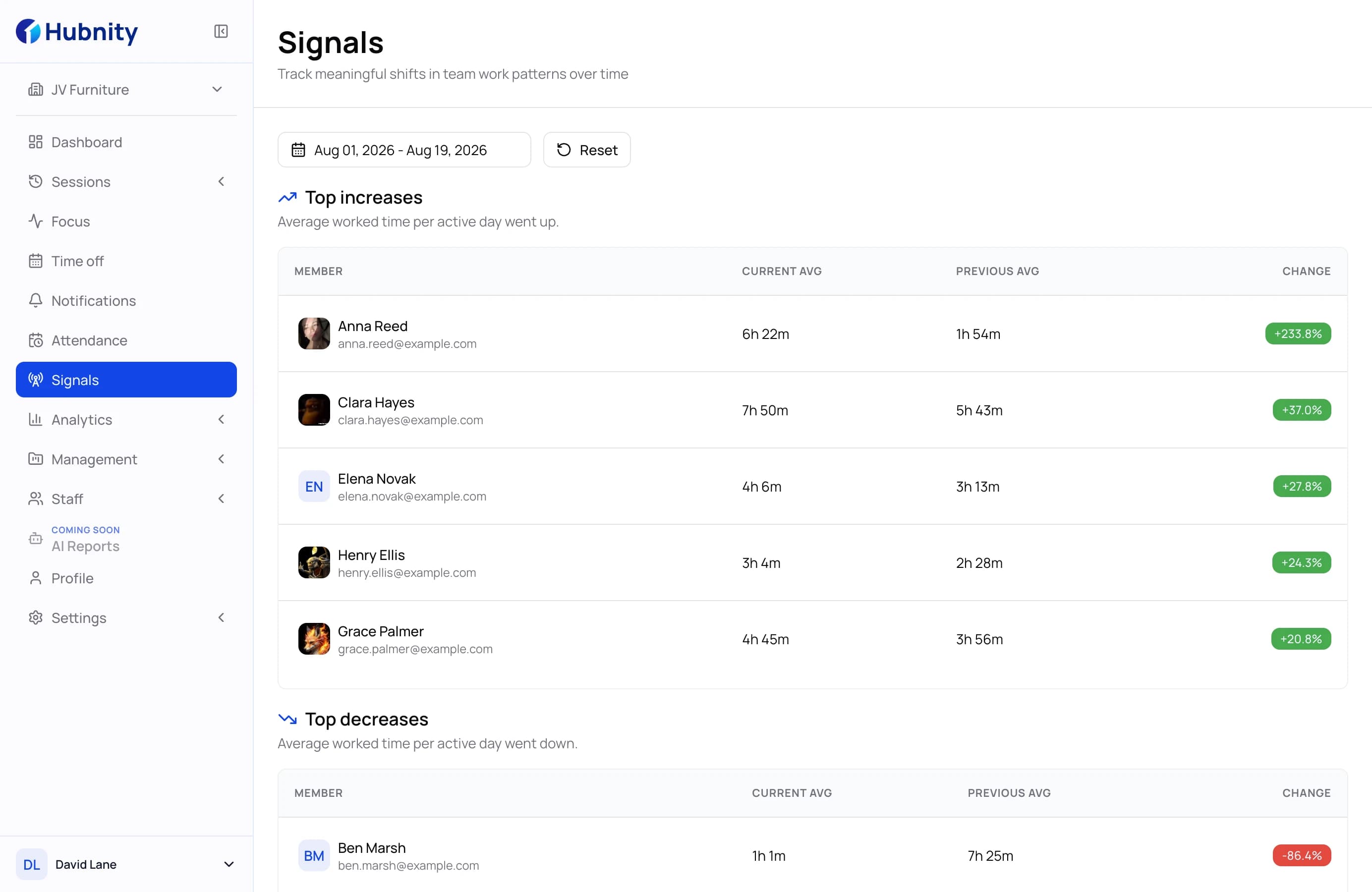
Deep work signals for distributed teams
Turn activity patterns into actionable focus insights for managers — without micromanaging every app switch.
7 min readHubnity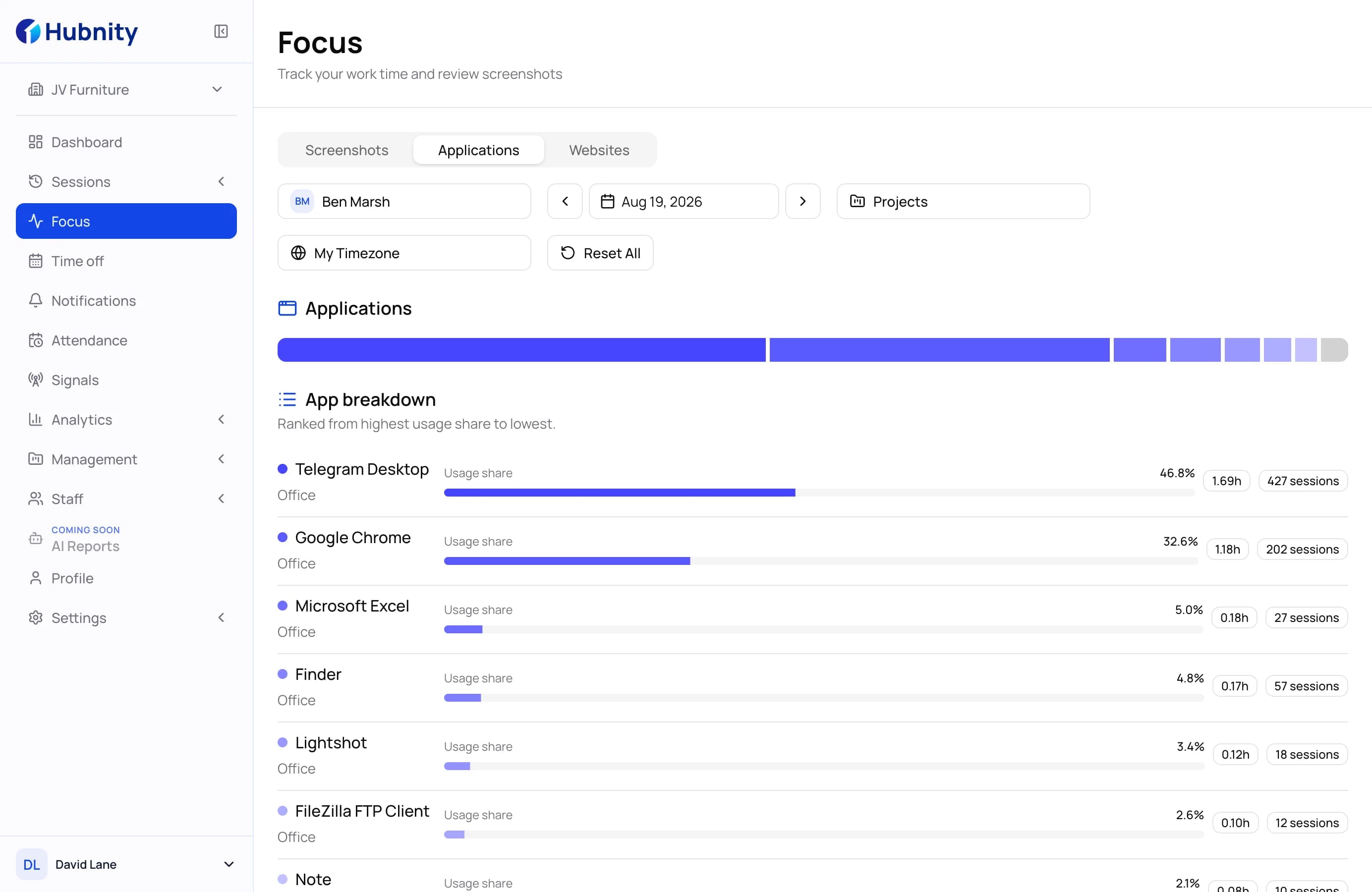 Employee Productivity
URL tracking policies that balance privacy and insight
Define what domains are in scope, how data is retained, and how employees can audit their own activity history.
7 min readHubnity Remote Teams
How to build a time tracking policy remote teams actually trust
A practical playbook for rolling out time tracking without hurting morale — from policy wording to privacy defaults.
8 min readHubnity