
Remote vs office performance: what the data shows
We compared focus patterns, collaboration windows, and output stability across hybrid teams over a full quarter.
 Hubnity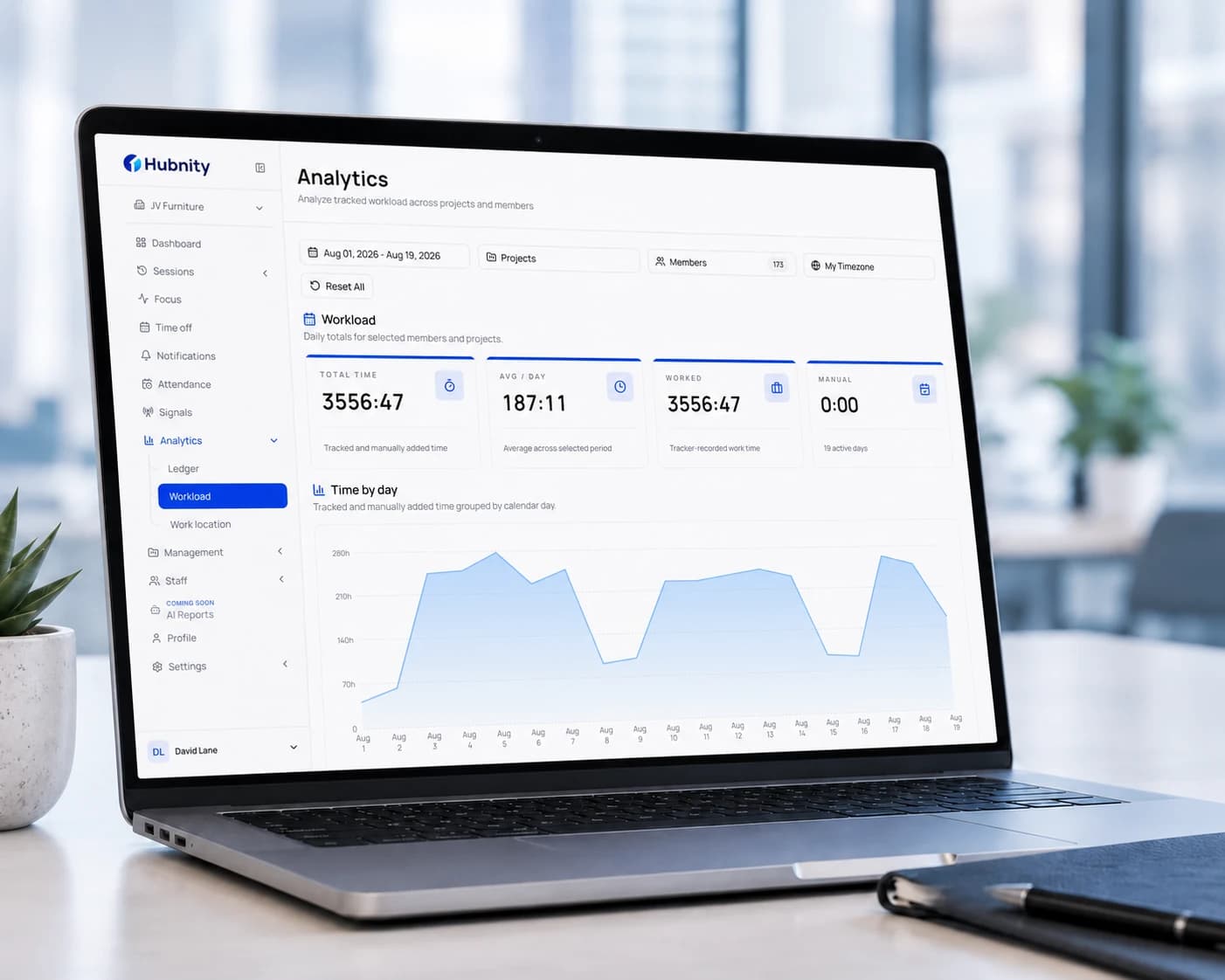
Hybrid performance comparisons are only useful when teams compare similar roles, timelines, and project conditions — not just location labels. Raw averages without segmentation mislead more often than they inform.
Compare like with like
Segment by role, project type, and collaboration load before drawing conclusions about remote versus in-office patterns.
A support team and a research team should not share one performance benchmark.
- Role and seniority segmentation
- Project phase and deadline pressure
- Overlap hours with dependent teams
Separate output from presence
Hours online are not the same as productive delivery. Use outcome metrics — milestones, quality, rework — alongside activity data.
Presence bias can hide real performance differences and create unfair reviews.
Look at collaboration effectiveness
Compare handoff speed, review cycles, and blocker resolution — not just individual output.
Hybrid teams often differ in how they collaborate, not how much they produce.
"Location is rarely the variable. Workflow design usually is."
Use insights to improve workflows for everyone
If remote staff wait longer for approvals, fix approval workflows — do not mandate office days as a blanket fix.
Good analysis points to system changes, not location mandates.
Practical steps to apply this week
- Segment last quarter's delivery data by role and project type
- Add rework and blocker metrics to performance reviews
- Interview teams about workflow friction before changing policy
- Pilot workflow fixes with one hybrid squad
"The most useful performance analysis answers what slowed delivery — not where someone sat."
Conclusion
Remote versus office comparisons require careful segmentation and outcome-focused metrics.
Used well, the data improves workflows for every location — used poorly, it becomes a justification for default opinions.

Hubnity
Practical guidance from the Hubnity product and operations team.
Related articles
 Remote Teams
How to build a time tracking policy remote teams actually trust
A practical playbook for rolling out time tracking without hurting morale — from policy wording to privacy defaults.
8 min readHubnity Remote Teams
Async standups that respect time zones
Replace noisy morning calls with lightweight check-ins tied to real work blocks, capacity, and delivery risk.
6 min readHubnity Payroll & Billing
Billable hours without spreadsheet chaos
How agencies connect tracked time, client rates, and clear exports in one workflow — without rebuilding reports every Friday.
6 min readHubnity