
Overtime guardrails for growing teams
Set proactive alerts before burnout weeks turn into payroll surprises — with thresholds managers can actually act on.
 Hubnity
Overtime surprises usually show up in the data long before they show up in payroll. Proactive thresholds give managers a chance to rebalance work early — before burnout, budget overruns, or client disputes.
Set thresholds teams can act on
Alerts are useful only when they arrive early enough to change the plan. Start with weekly thresholds before moving to daily nudges.
Thresholds should reflect role and project phase — a launch week legitimately looks different from steady-state operations.
- Weekly overtime warning at 5% above target
- Escalation at 10% with manager review required
- Project-level caps for fixed-fee engagements
Pair alerts with conversation prompts
A number without context creates anxiety. Pair each alert with suggested manager actions: redistribute tasks, defer scope, or add capacity.
This turns guardrails into coaching tools instead of punitive triggers.
Involve finance early in threshold design
Finance teams can translate overtime patterns into margin risk faster when thresholds align with project budgets.
Shared definitions prevent managers and finance from arguing over the same numbers at month end.
Review guardrails quarterly
Growing teams change shape quickly. Thresholds that made sense at 30 people may be too loose or too tight at 80.
Quarterly reviews keep guardrails aligned with hiring plans and delivery commitments.
Practical steps to apply this week
- Define overtime thresholds by role and engagement type
- Enable weekly manager digest emails for threshold breaches
- Document escalation paths for client-facing teams
- Review overtime trends in your next leadership meeting
Conclusion
Overtime guardrails work when they are early, contextual, and actionable.
The best systems prevent surprises — they do not just document them after payroll runs.

Hubnity
Practical guidance from the Hubnity product and operations team.
Related articles
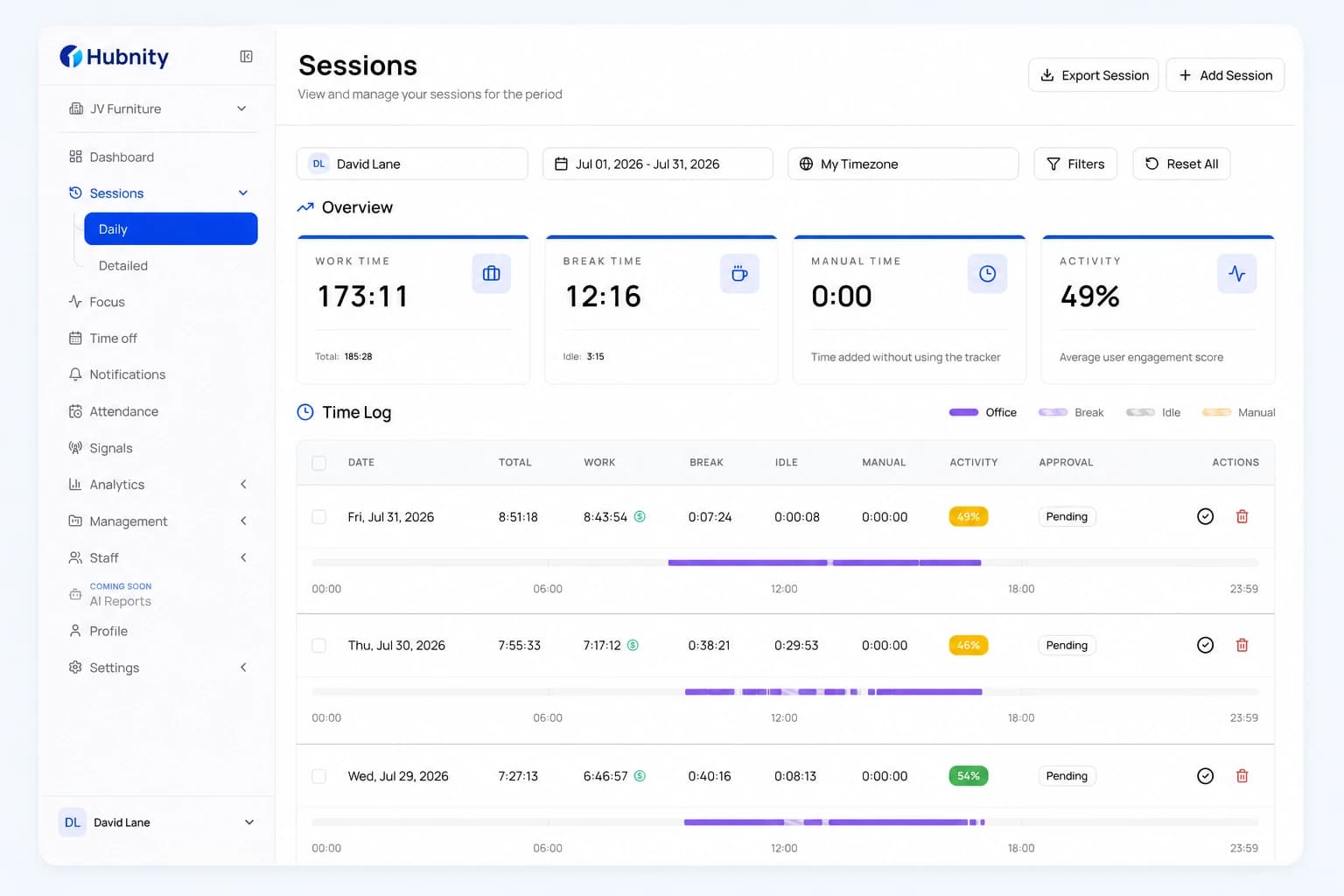 Time Tracking
What we shipped in timesheet approvals
A closer look at batch approvals, exception flags, and audit trails designed to help finance teams close weeks faster.
5 min readHubnity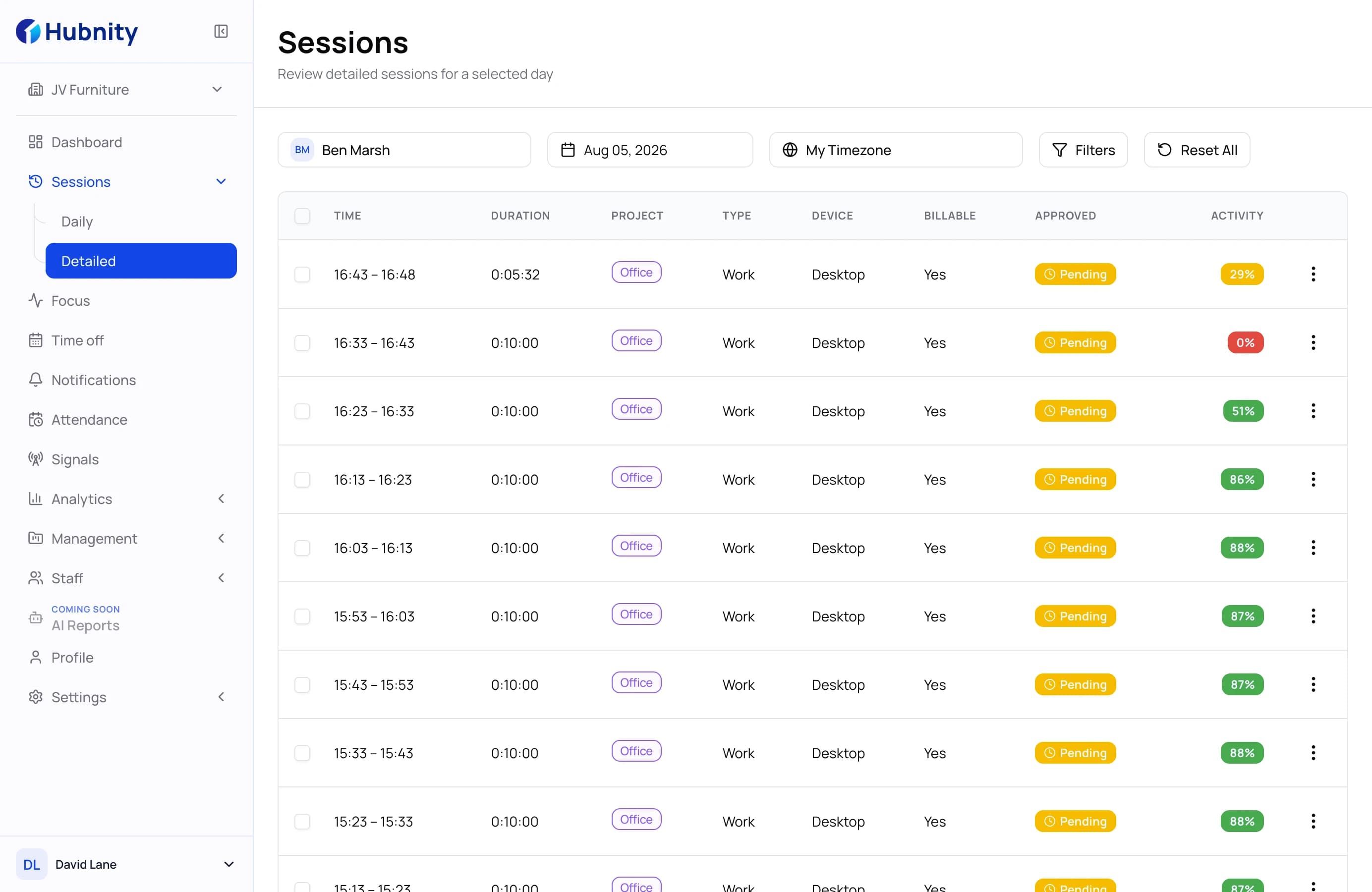 Time Tracking
Quick-start guide for weekly timesheet reviews
A lightweight checklist managers can run in fifteen minutes to catch missing entries, approval bottlenecks, and billing gaps.
4 min readHubnity Remote Teams
How to build a time tracking policy remote teams actually trust
A practical playbook for rolling out time tracking without hurting morale — from policy wording to privacy defaults.
8 min readHubnity